
Stucco Mold Removal Bradenton FL That Works
Our stucco mold removal Bradenton service treats mold and mildew at the source, not just the surface stain. Stop growth from spreading and restore your stucco’s appearance. Request your free estimate today.
What's the Difference Between Mold, Mildew, and Algae on Stucco?
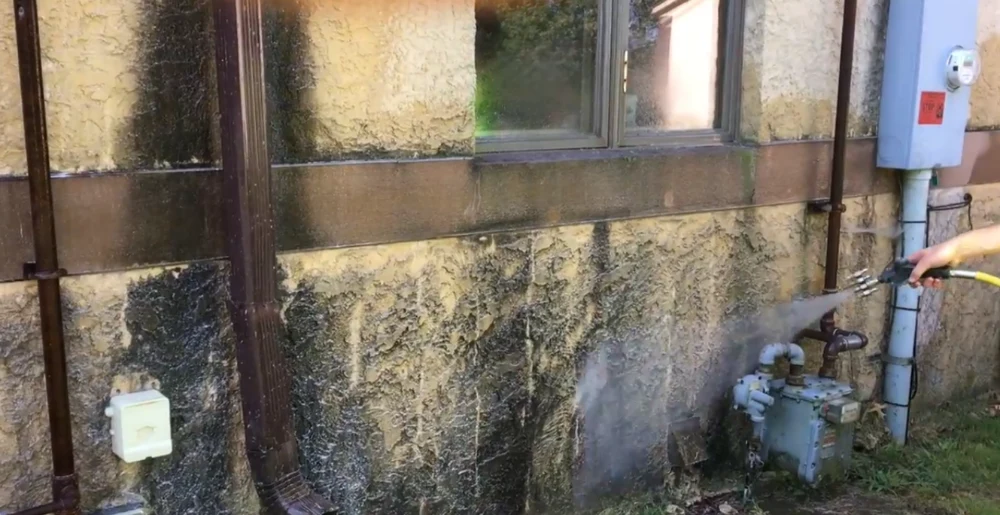
These three types of growth are often confused, but they behave differently on stucco surfaces. Mold typically appears as dark, fuzzy patches and can penetrate porous stucco more deeply than surface-level growth. Mildew presents as a thin, powdery gray or black film that sits closer to the surface and spreads across wider areas.
Algae, by contrast, usually shows up as greenish streaking rather than dark patches, and thrives in consistently damp, shaded conditions. Knowing which one you’re dealing with matters, since each responds slightly differently to treatment, and misidentifying the growth can lead to using the wrong approach.
Why Stucco Grows Mold Fast in Florida
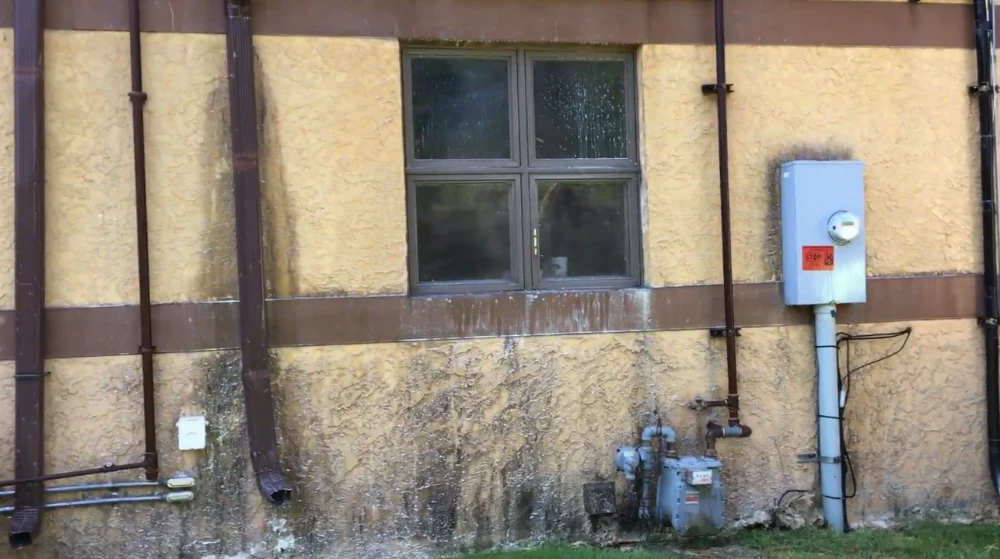
Stucco’s rough, porous texture holds moisture longer than smoother siding, giving mold and mildew constant fuel to grow in Bradenton’s climate.
Florida humidity keeps stucco surfaces damp far longer than in drier climates, accelerating growth cycles significantly.
Regular rain events add moisture faster than stucco can fully dry between storms.
Areas near landscaping or facing away from direct sun stay wet the longest, growing mold first.
Identifying Black Mold on Stucco
Black mold on stucco often gets mistaken for ordinary dirt, delaying treatment until it spreads much further across the surface. Knowing what to look for helps you catch it early.
- Dark, Fuzzy Texture: Unlike flat dirt stains, mold typically has a slightly raised, fuzzy appearance.
- Concentrated in Shaded Spots: Growth clusters near roof overhangs, landscaping, or north-facing walls first.
- Spreads in Irregular Patches: Mold grows outward unevenly, unlike consistent dirt buildup from runoff.
- Doesn’t Wash Off with Water Alone: A simple hose rinse won’t remove it, since it’s growing into the surface.
- Musty Odor Near Affected Areas: Some homeowners notice a faint musty smell close to heavily affected sections.
- Worsens After Rain: Visible growth often becomes more pronounced following periods of heavy rainfall.
- Appears Darker Than Typical Staining: Mold tends to be noticeably darker than mineral or rust-based stains.
Mildew Stains on Stucco Homes
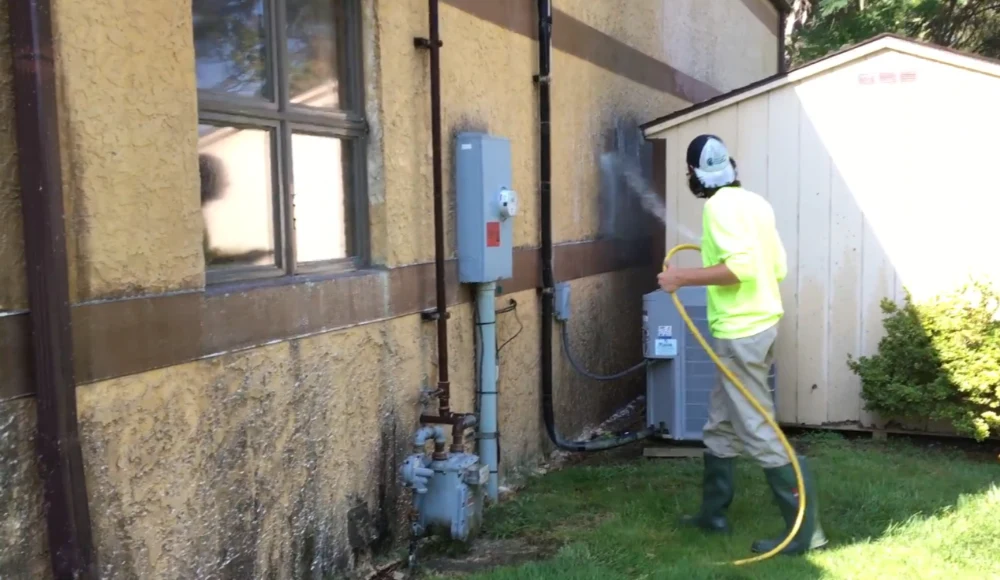
Mildew stains stucco house exteriors differently than mold, presenting as a thin, powdery film rather than raised, dark patches. It often spreads across broader wall sections rather than clustering in one concentrated spot, making it look more like a dusty gray or black haze across the surface.
Because mildew sits closer to the surface than mold, it typically responds well to a thorough soft wash cleaning we offer in house wash. Left untreated, though, it continues spreading and can make stucco look prematurely aged, even on homes that are otherwise well maintained.
Request your free estimate today. Our licensed, insured team identifies the exact growth type before treating it — mold, mildew, or algae — and uses the right approach for each.
How We Remove Mold from Stucco Siding
Removing mold from stucco siding safely requires more than a standard rinse, since mold can grow into the surface rather than just sitting on top of it.
We identify whether the growth is mold, mildew, or algae before choosing a treatment approach.
A cleaning solution breaks down growth at the source, not just the visible surface layer.
Low-pressure rinsing removes loosened growth without stressing the stucco underneath.
We check the surface to confirm growth has been fully addressed before finishing.
Preventing Mold Between Cleanings
Regular cleaning on a 12- to 18-month schedule helps keep mold and mildew from building back up to the same level, especially on shaded walls that stay damp longest between rains. Homes near heavy landscaping often benefit from slightly more frequent attention.
Trimming back vegetation that blocks sunlight and airflow can also slow regrowth between professional visits, giving shaded stucco sections more time to dry out after Florida’s frequent rain events.
Services We Offer
Stucco mold and mildew cleaning is just one part of what we do. Explore our other services and keep every surface on your property looking its best.
Request Your Free Mold Removal Estimate
Ready to stop mold and mildew from spreading? Request your free estimate today. Our licensed, insured team identifies the exact growth type before treating it.
FAQs on Stucco Mold Removal
Why does stucco grow mold so quickly in Florida?
Stucco’s rough, porous texture holds onto moisture longer than smoother siding, and Bradenton’s humidity gives mold constant fuel to grow. Shaded walls near landscaping stay damp the longest, which is usually where staining shows up first.
Can mold on stucco make its way inside my home?
In most cases, exterior stucco mold stays on the surface and doesn’t spread indoors. However, if moisture is getting behind the stucco layer, it’s worth having that checked separately from routine exterior cleaning.
Will mold come back after cleaning?
It can, especially in shaded or humid areas, since the conditions that caused it initially haven’t changed. Regular cleaning on a consistent schedule is the most effective way to keep regrowth to a minimum.
How is mold different from algae on stucco?
Mold typically appears as dark, fuzzy patches, while algae shows up as greenish streaking in consistently damp areas. Both thrive in Florida’s climate, but they respond slightly differently to treatment, which is why identifying the growth type matters before starting.